Capabilities, Pricing, and Integration Risks: x-ai/grok-4-fast:free

In the ever-evolving world of AI, the concept of "free" draws considerable attention, especially when it involves models like x-ai/grok-4-fast. This entry into the AI landscape offers significant AI access functionalities. Designed by xAI, and available via OpenRouter, Grok 4 Fast represents a shift towards more affordable and accessible AI solutions. This article explores its technical prowess, the implications of its free status, pricing structures, integration paths, and potential risks for developers.
Discover the capabilities of Grok 4 Fast
Grok 4 Fast is notable for its 2-million-token context window, which positions it as a robust tool for handling complex and lengthy datasets. This feature alone makes it competitive against models like Google's Gemini 1.5 Pro, yet more accessible in terms of cost. The model offers distinct SKUs for reasoning and non-reasoning tasks, providing developers with flexibility to adjust performance based on the complexity of operations. Its unified reasoning architecture allows for seamless integration of both rapid response and detailed reasoning through a single set of model weights, a significant departure from models requiring separate architecture for different tasks.
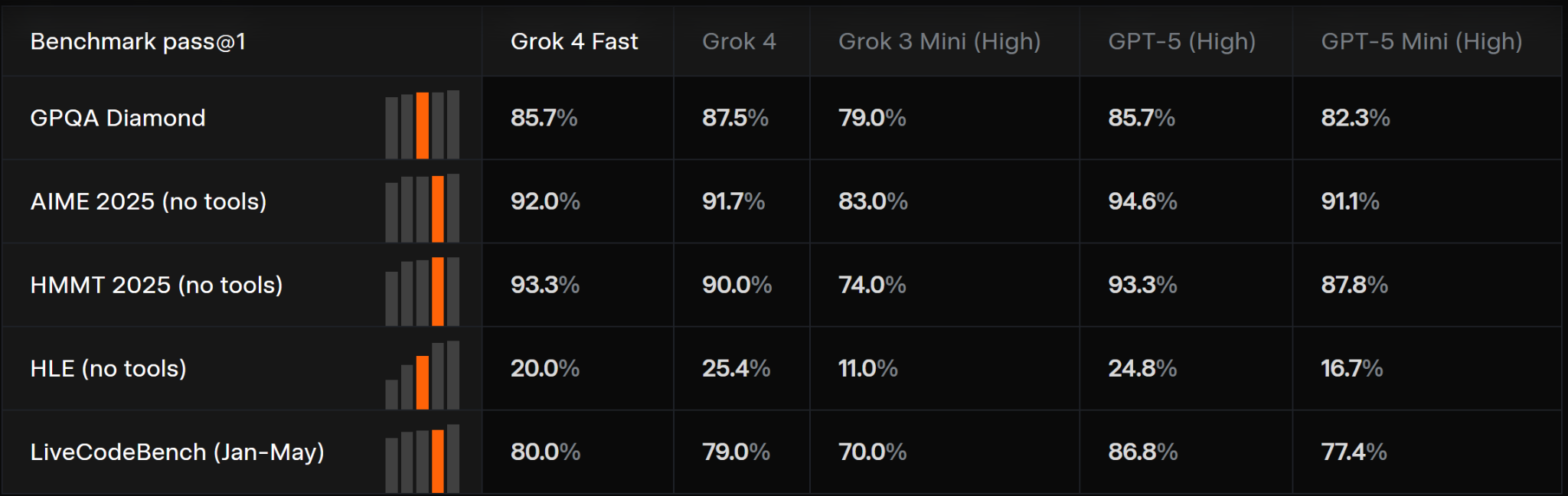
What 'free' really means for Grok 4 Fast
The term "free" regarding Grok 4 Fast often refers to the promotional offers of OpenRouter Vercel. These promotions, while enticing, are typically temporary and subject to availability based on current provider status. For instance, OpenRouter once offered a free tier that drew developers to test the waters without financial commitment. However, community feedback has indicated that access fluctuates, highlighting the need for developers to verify available promotions actively before integration.
Pricing structures and cost implications revealed
Despite promotional offers, understanding Grok 4 Fast's pricing structure is crucial for developers planning long-term use. With its competitive token pricing, xAI offers a broad range of cost efficiencies. The input token price is set at $0.20 per million tokens and $0.50 for output tokens, translating into significant savings for high-volume tasks. For example, a project that incurs costs of $1,000 a month with competitors might only cost $40 with Grok 4 Fast. Such savings open doors for small businesses and independent developers looking to leverage sophisticated AI without burdensome expenses.
| Model Variant | Context Window | Input Price (per 1M tokens) | Output Price (per 1M tokens) | Key Feature / Optimization |
|---|---|---|---|---|
| Grok 4.1 Fast | 2,000,000 | $0.20* | $0.50* | Latest agentic tool-calling & research |
| Grok 4 Fast | 2,000,000 | $0.20* | $0.50* | High-speed multimodal (Vision/Text) |
| Grok Code Fast 1 | 256,000 | $0.20 | $1.50 | Repository-level coding & reasoning |
| Grok 4 (Standard) | 256,000 | $3.00 | $15.00 | PhD-level reasoning & complex logic |
| Grok 4 Heavy | 256,000 | Subscription | Subscription | Multi-agent "thinking" (SuperGrok Heavy) |
| Grok 4.1 Fast:free | 2,000,000 | $0.00 | $0.00 | Promotional tier (OpenRouter exclusive) |
Rates double for requests exceeding 128,000 context tokens ($0.40 In / $1.00 Out).
How integration paths and platforms differ
The choice of platform for integrating Grok 4 Fast can impact its reliability and cost-effectiveness. Azure xAI's native API each offers unique benefits and limitations. Azure provides robust scalability suited for enterprise use, while Vercel's integration focuses more on agile development environments. These platforms differ in tool support, rate limits, and SLAs, meaning developers should choose based on their specific needs for stability, sustainability, and support.
Navigating risks and learning from community insights
As with any evolving technology, there are risks associated with Grok 4 Fast. Safety and hallucination fluctuations in access to its free version present challenges. The importance of having backup plans cannot be overstated, especially when relying on free access. Community reports point to frequent changes in availability, which can disrupt workflows if not managed properly. Additionally, incorporating robust safety filters and monitoring for inaccuracies or unsuitable outputs remains critical in maintaining integrity and trust in AI applications built on this model.
Your next move: verify, then build
Grok 4 Fast lets you ship experiments that would be too expensive (or too context-limited) anywhere else. But don’t confuse a :free label with an SLA. Free access on aggregators like OpenRouter is often promotional and can vanish, throttle, or rotate providers without warning - so treat it like a bonus lane, not the only road.
If you’re considering Grok 4 Fast, do two things before you commit:
- check the provider status right now on the platform you plan to use, and
- wire in a fallback to the paid endpoint (or another model) so your app doesn’t break when the free tier blinks out. Then let your codebase decide - run evals, log results, and keep what performs.
And if you’re working inside an environment designed for prompt management like PromptLayer, lean into the workflow it’s built for: iterate fast, capture what works, and turn those winning prompts into reusable, observable templates. Grok 4 Fast is a great engine - just make sure you’re not building your product on the “free” sticker.